
"How does the generator know when the power goes out?"
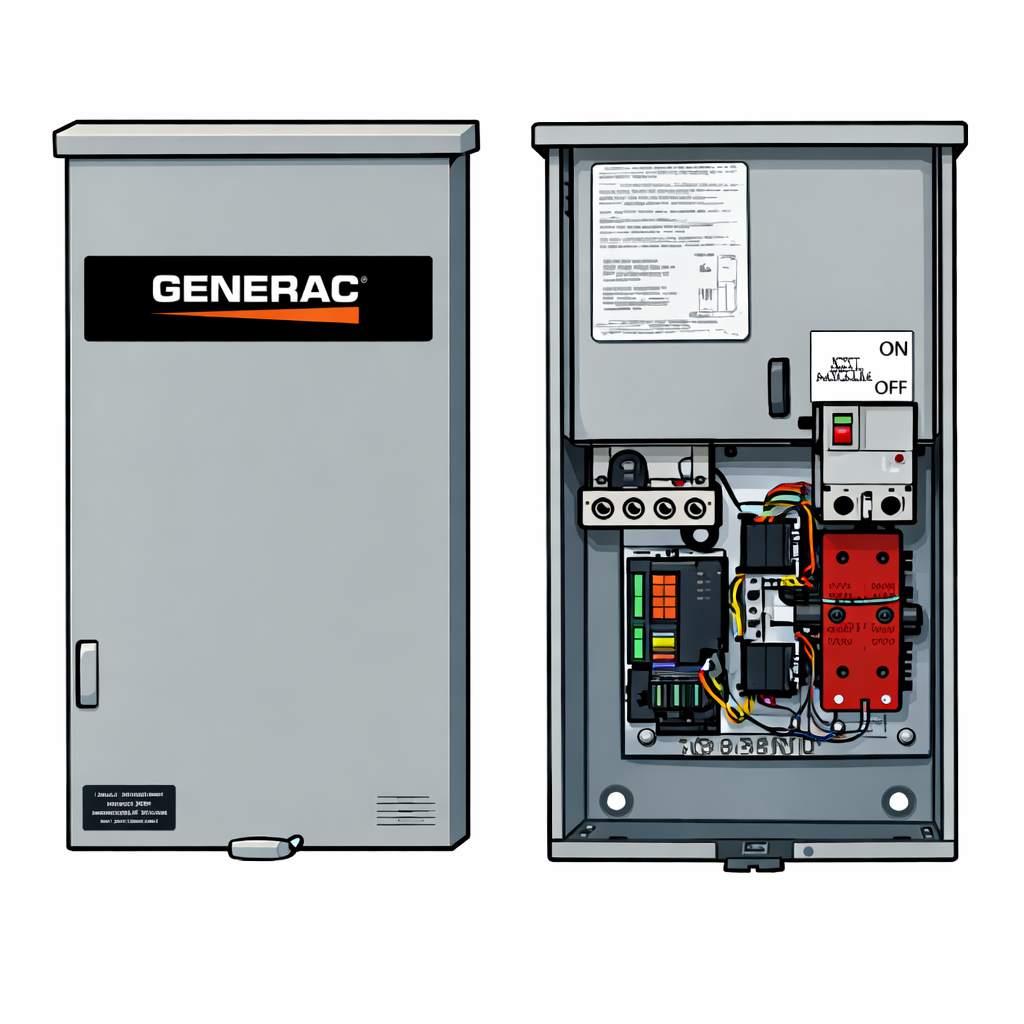
As a technician, I get a lot of questions about how a generator magically knows when the grid goes down. The answer is the gray box sitting between your home and the power company: the transfer switch.
That box is your Automatic Transfer Switch, or ATS, and sometimes just called your Transfer Switch. Creative, right?
Here is the basic explanation of what that device actually does, the incredibly smart safety features built into it, and what to do if you ever need to operate it manually.
The Basics: A Safely Automated Process
Under normal conditions, your house receives all its electricity right from the utility company. But when that power fails, the transfer switch steps up. It physically disconnects your home from the utility lines and connects it to your standby generator instead. On most modern systems, this entire process happens automatically the moment the generator starts up and begins producing power.
One of the smartest (and least understood) safety features of this system is how it decides to make the switch. Depending on your specific manufacturer, either the transfer switch or the generator itself is monitoring the power coming from the street 24/7.
When the lights go out, the system doesn’t just panic and switch immediately. There is a built-in delay to verify that the grid is actually down, and not just experiencing a temporary fluctuation or flicker. Once it confirms a real outage, it signals the engine to start.
Here is the crucial part: the switch will only physically move into the backup position once the generator is actually running and producing stable electricity. If your generator fails to start for any reason—like a dead battery or an empty tank—the switch safely stays locked in the utility position.
The Ultimate Safety Feature: The Interlock
The transfer switch is engineered so that utility power and generator power can never, ever cross paths.
Inside that box are heavy-duty mechanical and electrical interlocks that make it physically impossible for both power sources to be connected at the same time. When it switches your house over to generator power, it entirely severs the connection to the utility first. When the grid comes back online, it drops the generator before reconnecting to the street.
This isn't just to protect your appliances—it strictly prevents backfeeding, ensuring that your generator isn't sending deadly voltage down the street while utility workers are trying to repair the lines.
When a lineman is out in a hurricane trying to repair a downed wire, they expect that wire to be dead. If your generator is backfeeding, you are sending thousands of volts directly into their hands. The ATS physically isolates your home from the grid the moment it switches to generator power, making it impossible to backfeed. It is a literal lifesaver.
Does the ATS Need Maintenance? Absolutely.
Because it sits quietly on the wall, people assume the ATS is maintenance-free. As a technician who replaces burnt-out transfer switches every summer, I can tell you that is a massive mistake.
While you don't need to change oil or filters in an ATS, it absolutely requires professional inspection during your annual service for a few critical reasons:
- The Florida Wildlife Hotel: To lizards, frogs, or colony of ants, a dry ATS box is premium real estate. I have seen plenty of transfer switches completely shorted out because a gecko crawled across the live electrical contacts. As needed, technicians have to open the box, clean it out, and ensure the weather seals are keeping the bugs at bay.
- Thermal Expansion: The main electrical lugs inside that box are carrying 200 amps of power. As electricity flows, the metal heats up and expands. When it cools, it contracts. Over a year or two, this constant expansion and contraction can cause the heavy wire connections to loosen. A loose electrical connection can create arcing, which can easily melt components and create a fire. We come in, inspect, and manually re-torque every single lug to factory spec if needed. WARNING: you can safely look at a transfer switch, but you should NEVER attempt to touch or move ANYTHING inside the ATS box.
- Corrosion: It's Florida. The humidity is brutal. The mechanical parts that throw the switch need to be clean and lightly lubricated so they don't seize up when you need them to move.
The Manual Override (Generac Switches)
While this process is designed to be completely hands-off, many Generac transfer switches include a small, yellow manual transfer handle. As technicians, we typically only use this for troubleshooting or during certain rare situations.
If you ever find yourself in a situation where you need to manually transfer the switch yourself, you must follow these exact steps carefully:
- Turn off your main utility breaker: Go to your main electrical panel and flip it off. Even if the power is already completely out in your neighborhood, we still strongly recommend turning this breaker off as an extra, non-negotiable safety step.
- Shut off the generator: If your generator is currently running, turn it off before touching the switch.
- Insert the handle: Place the yellow manual handle into the yellow access hole on the transfer switch.
- Make the switch: Carefully slide the mechanism over into the generator position.
- Start the engine: Once the switch has been successfully moved to the generator position, you can start the generator.
The good news is that even if you manually switch it over, when the utility power returns, the transfer switch will still automatically return to the utility position on its own, shut the generator down, and restore your home to normal grid power.
Important Safety Information: While a manual transfer is absolutely possible, we strongly recommend contacting us before attempting this yourself. We can guide you over the phone or come out to assist you directly.
Bottom-line advice: The ATS is what separates a safe, automatic backup system from a dangerous, manual headache. Leave the box closed—there is high voltage inside that can easily kill you